By Nicola Ballenden
In this monthly update, I share highlights from Mind Australia’s advocacy work over the past month – including the key issues we’re speaking up on, the conversations shaping the sector, and the opportunities we see to improve outcomes for people experiencing mental health challenges, as well as their families and carers.
The NDIS Bill has now passed through the Senate. While we welcome amendments that provide additional safeguards for people with high support needs, we remain concerned about what these reforms could mean for people with psychosocial disability.
We recognise the importance of a sustainable NDIS, but sustainability cannot come at the expense of people being able to access the support they need and deserve. We’re also concerned that changes to eligibility criteria could further entrench discrimination against people with psychosocial disability.
In my last Advocacy update, we asked people to share their experiences through our NDIS survey. We received more than 150 responses, including from NDIS participants, family members and carers, and Mind and One Door Mental Health staff. We’re grateful to everyone who shared their experiences, which have informed, guided and strengthened our advocacy. Now, as these reforms move from legislation to implementation, our focus will shift to ensuring the voices of people with lived experience are heard.
This is mental health made human in action and at the heart of our advocacy – listening to people’s experiences and using what we hear to push for mental health and disability systems that are inclusive of, and responsive to the people who need them.
Keep an eye on Mind’s website and social media channels for more updates on our NDIS advocacy.
Our submission on Victoria’s next Disability Plan
We made a joint submission with the Mental Health Legal Centre on Victoria’s Disability Plan 2027-2031.
Our submission highlights the disproportionate rates of housing insecurity, homelessness, social disadvantage, stigma and exclusion experienced by people with psychosocial disability. Too often, housing, disability and mental health systems are not designed to respond to the episodic and complex support needs of people with psychosocial disability. As a result, many people are left without the practical and ongoing support they need to secure housing, sustain their tenancies and live connected lives in their communities.
In our submission, we called for a Disability Plan that recognises housing as fundamental to health, recovery and social inclusion, and strengthens the supports people need to access and maintain a safe and secure home.
You can read our submission with MHLC here.
Advocating for stronger and longer commitments to supported housing
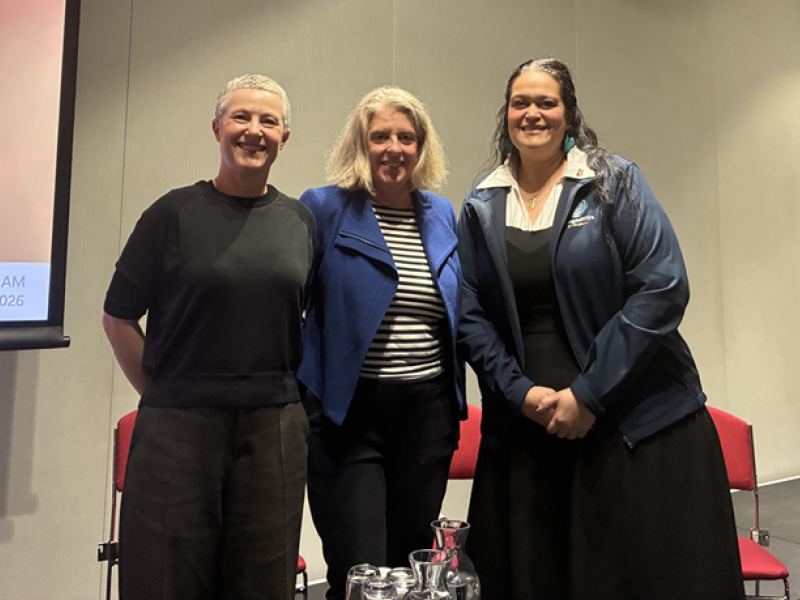
I had the pleasure of joining a panel on mental health and homelessness at the Labor Engage ’26 Fringe Conference, held alongside the Australian Labor Party National Conference in Adelaide late last month.
Hosted by Homelessness Australia, the panel brought together Kate Colvin, CEO of Homelessness Australia, and Patricia Cotton, CEO of Yangadlitya Indigenous Corporation (pictured above), to explore Australia’s housing and homelessness crisis and the action needed to address it.
The discussion was an opportunity to emphasise the need for a dedicated, long-term commitment to supported housing as an essential part of both the mental health and housing systems.
I’ll be continuing this conversation today at Homelessness Australia’s event at Parliament House in Canberra. This will be another valuable opportunity to speak with Ministers, Members of Parliament and other parliamentary staff about the importance of supported housing for people experiencing mental health challenges, and the need for stronger and longer-term investment.