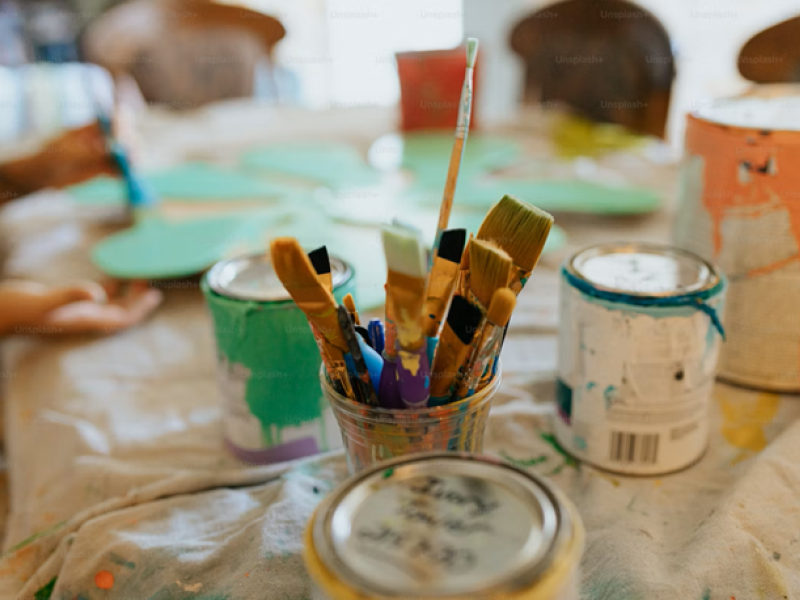
People impacted by drought and the algal bloom event were among the 50 participants in Art Therapy sessions recently held across the Yorke Peninsula by Mind Australia.
The sessions were delivered by Mind as part of the Drought Mental Health Support Program, established and funded by the Government of South Australia in recognition of the mental health impacts of drought on regional communities.
Held in Warooka, Arthurton and Kadina, the sessions supported 50 women and men over the age of 16 to come together to gain an understanding of the benefits of Art Therapy in healing from life's challenges, focusing on wellbeing, connection, and identity.
They were facilitated by Colleen Lynch, a Mind Art Therapist and Counsellor based on the Eyre Peninsula, and Linda McCabe, a Mind Counsellor based in Yorke Peninsula who provided local connection with participants and ongoing one-to-one mental health support.
Mind has been delivering the Drought Mental Health Support Program in remote areas of South Australia including Flinders and Upper North, Mid North and Yorke Peninsula, Eyre and Far North regions, since 2022. It is one of the largest providers of community-managed mental health support services in Australia with a range of residential, mobile outreach, centre-based and online services
The Drought Mental Health support staff can help people improve their mental health resilience, increase their access to mental health and other services, and help people address grief and loss. It can also strengthen families and communities experiencing stress caused by drought.
The team can meet people in their homes, in community and is also providing support out of local community centres and medical centres. People can access support as needed, whether it is weekly support or a one off chat.
The impact of drought runs deep in remote communities, as Colleen Lynch explained.
“The drought isn’t over. It’s a ‘green drought’ – there’s grass growing but the subsoil is bone dry. There’s also a long history of drought in these communities – and generational trauma from previous droughts.”
“The algal bloom has also had a big impact in on tourism in affected coastal areas – and that impacts local businesses and their ability to keep staff on. Now the petrol situation is adding to that.”
Colleen said relationships are often put under strain by these pressures, a common reason for people to seek support. As both an Art Therapist and Counsellor, Colleen has noticed a marked gender divide in how people seek support.
“Men will come to see me for one-on-one counselling if there’s been a relationship breakdown – that’s a primary catalyst to get help. Women are generally more open to the art therapy,” she said.
Colleen said one of the key learnings for new participants in art therapy is that it is all about the process more than what you’ve made at the end of it.
“It’s not about the beauty or aesthetics of what you’re making; it’s more about connecting with your feelings and emotions through the art process.”
One session, held at Kadina Memorial High School introduced Art Therapy to Year 12 Psychology Students, giving them an opportunity to explore career choices building resilience for communities in regional areas.
Linda McCabe said it was great to see the level of support that businesses in the local community provided the Art Therapy sessions, along with the Yorke Peninsula Council.
“They posted and shared posts about the sessions, including information about how Art Therapy works. Reading those was the first step in the journey of understanding for some of the participants,” she said.
Find out more about the Drought Mental Health Support Program.