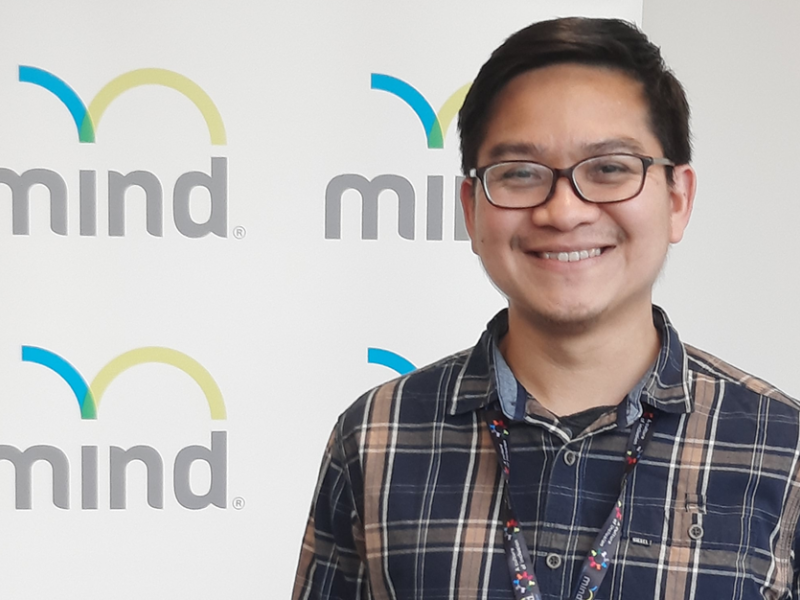
PhD candidate Pyae Phyo Maung’s internship with Mind’s Research team will inform his work understanding community resilience in his home country Myanmar and other conflict zones.
Pyae Phyo is a second year PhD candidate at the School of Social and Political Sciences at the University of Melbourne. His PhD aims to help build the resilience of humanitarian workers and communities in Myanmar.
“Since the coup in 2021, there has been resistance, revolution and ongoing armed conflict,” Pyae Phyo said. “It is a brutal and protracted crisis and humanitarian agencies are taking big risks to do their work.”
Pyae Phyo is originally a medical doctor who worked with Medicine Sans Frontieres supporting the persecuted Rohinja community back in 2008. He completed a Masters in Program Evaluation from the University of Melbourne in 2014 and now has over 12 years’ experience as an evaluation practitioner in the community development and humanitarian sector in Myanmar.
Pyae Phyo has evaluated a range of community and grassroots organisations there that are working to alleviate poverty, improve women’s empowerment and reduce gender-based violence. Others are working in humanitarian assistance such as cyclone recovery or in civic advocacy for social justice issues, including responsible and ethical investment in the face of corruption and land grabs.
“I am researching how humanitarian actors remain resilient in such a difficult environment. People around them are losing their lives, including within their own families – when children are being killed it is especially traumatic,” Pyae Phyo said.
“Mental resilience and emotional wellbeing – individual, collective and communal – for aid workers in these sorts of situations is absolutely essential for people to be able to continue to do this important work.”
Pyae Phyo has been learning what helps keep people resilient by applying a grounded theory research approach and conducting in-depth interviews with local humanitarian workers in Myanmar. (Grounded theory is a qualitative research method that builds theory directly from data, rather than starting with a hypothesis).
These insights will help in developing a context-specific community resilience framework that reflects the complexities of the current crisis in Myanmar. It will benefit disaster and humanitarian scholars and practitioners as they can enrich resilience theories and guide more effective actions in Myanmar and other complex crises.
Pyae Phyo has joined Mind’s Research team as part of an academic industry internship program initated by the Collaborative Centre for Mental Health and Wellbeingc. Mind is the first industry partner to host the internship, which has been facilitiated by the Australian Postgraduate Intern program.
At Mind, Pyae Phyo is working with the Research team to evaluate the outcomes for our community recovery services.
Outcome measures are tools used to evaluate the effectiveness of a support service by measuring changes in a service user’s mental health and wellbeing across the course of the support they receive. Mind undertakes outcome measures to ensure its services are effective and to apply insights for practice improvement, advocacy and program design.
Pyae Phyo’s experience at Mind will provide insights into the design, implementation and application of outcomes measures in programs that could be applied internationally. PyaePhyo will consider how to report program outcomes in ways that assist practitioners, service users, managers and funders.
“Producing the outcome reports is helpful - it will definitely inform my PhD data analysis,” Pyae Phyo said.
Mind Research Manager Dr Laura Hayes said the placement was mutually beneficial.
“Pyae Phyo is an accomplished researcher and we have been delighted to have him on our team supporting our outcomes measuring work. He has brought international perspectives and his humanitarian values to the team. I’m so pleased that the internship will be helpful for his PhD in turn,” she said.