National Reconciliation Week (27 May - 3 June) is a time for reflection and, most importantly, action. It’s an opportunity for all Australians to consider the role we each play in advancing reconciliation and creating a more equitable future for Aboriginal and Torres Strait Islander peoples and communities.
For us at Mind Australia and One Door Mental Health, reconciliation is not separate from our work. It’s fundamental to the support we provide, and to who we are.
As a community mental health organisation, we understand that social and emotional wellbeing is deeply connected to culture, identity, community and self-determination. We also recognise the profound and ongoing impacts of colonisation, dispossession and intergenerational trauma on the mental health and wellbeing of Aboriginal and Torres Strait Islander peoples.
This National Reconciliation Week marks an important moment in Mind’s reconciliation journey as we prepare to launch our new Innovate Reconciliation Action Plan (RAP). Building on the foundations of our Reflect RAP (2019) and Innovate RAP (2023), our new RAP represents a significant step forward in embedding reconciliation across every part of the organisation through stronger accountability, leadership and systemic change.
Mind CEO Gill Callister said Mind was proud of the progress made through its reconciliation journey to date, while recognising there is more work to do.
“Our Reconciliation Action Plans have helped us increase cultural awareness, strengthen relationships with Aboriginal and Torres Strait Islander communities, improve cultural capability across our workforce and embed more culturally responsive practices into our services,” Ms Callister said.
“Through consultations undertaken to help shape our new Innovate RAP, there has been consistent acknowledgement that Mind has built a strong foundation for reconciliation. Our next opportunity is to strengthen how we move from commitment to consistency in practice across the organisation.”
Key highlights of Mind’s reconciliation journey to date include creating yarning circles within services, building relationships with local Elders, supporting staff to strengthen cultural capability, employing First Nations staff in identified roles, co-designing services with communities, embedding lived experience into service design, and delivering culturally informed programs and partnerships.
Looking ahead, Mind is focused on ensuring the Innovate RAP drives meaningful and lasting organisational change.
Wayne McEwan, Mind’s Manager – First Nations Partnerships and RAP Development, said the new RAP will strengthen governance and accountability, ensuring reconciliation is embedded across all areas of the organisation and supported by clear, measurable actions.
“A key priority will be embedding First Nations voices into formal decision-making processes, recognising that genuine partnership and shared leadership are essential to delivering culturally safe and responsive services,” Mr McEwan said.
“Mind’s new RAP will also align with a broader First Nations employment and engagement strategy, supporting stronger representation, career development and leadership opportunities across the organisation.
“Our goal is for cultural safety to become an organisational standard. This will be reflected not only in training and completing modules, but in everyday behaviours and actions.”
Mind’s new RAP, due to launch in July 2026, will reflect our commitment to continuing the work of reconciliation through action, accountability and partnership.
This National Reconciliation Week, we are reminded that reconciliation is not a single initiative or milestone; it’s an ongoing responsibility that we all hold. At Mind, we remain committed to listening, learning and walking alongside Aboriginal and Torres Strait Islander peoples to help create a more culturally safe, inclusive and equitable mental health system for all.
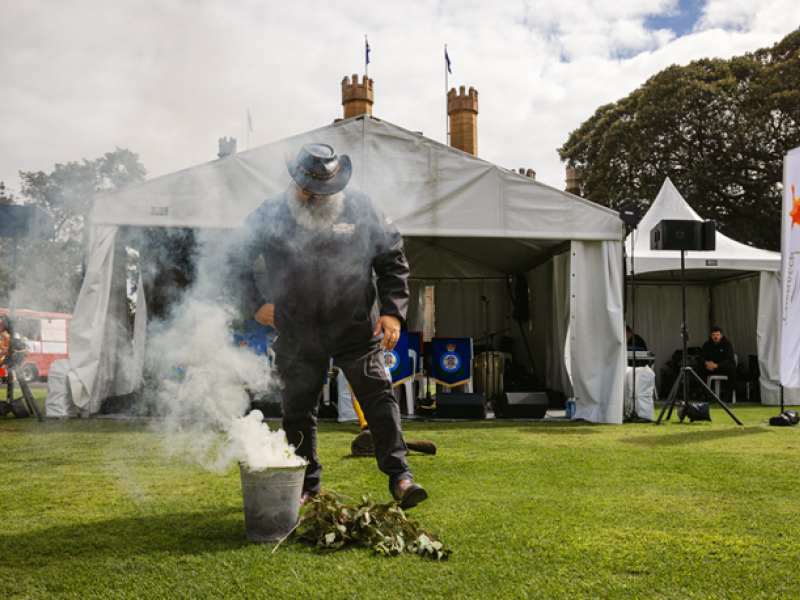
Image: Uncle Brendan Kerin performs a smoking ceremony at the 2025 One Door Mental Health Wellness Walk.