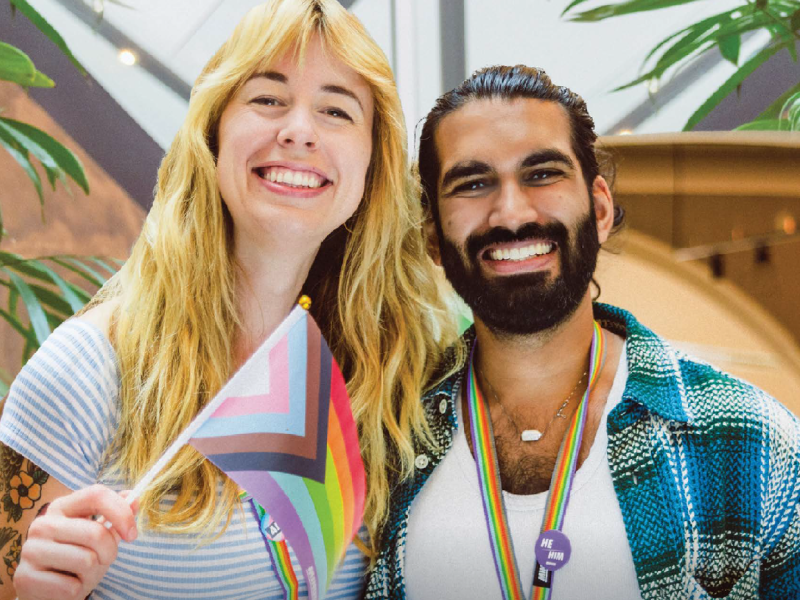
May 17 is IDAHOBIT - the International Day Against Homophobia, Biphobia, Intersex-phobia and Transphobia. It celebrates sexual and gender diversity and raises awareness of LGBTIQA+ rights violations around the world.
There have been great steps forward in reducing stigma and discrimination, but many people in Australia and worldwide still struggle with the impact of discrimination and violence on their mental health and wellbeing.
Research by the Australian Research Centre in Sex, Health and Society (ARCSHS) at La Trobe University indicates that LGBTIQ+ communities in Australia experience higher levels of mental ill health, suicidality and self-harm, compared with the general population. Within that research, trans and gender diverse participants appear to experience a greater risk of suicidal thoughts and behaviours, compared with cis-gendered participants. These findings are consistent with evidence from Australia and overseas.
Here at Mind, we know this all too well because of the ongoing demand for support we receive at our LGBTIQA+ Aftercare service. It currently has a two to three month waiting list.
This service offers support to people who are LGBTIQA+ and are having thoughts or intentions of suicide. It is provided by a team of peer practitioners and counsellors who are also part of the LGBTIQA+ community and have had their own lived experience of suicidal distress.
Geena Hardy, Mind’s LGBTIQA+ Strategy and Service Development Manager, said that members of the trans community, LGBTIQA+ people in rural and regional communities, and people from CALD (Culturally and Linguistically Different) backgrounds can be particularly prone to discrimination.
“Transphobia is so prevalent in our society and it has a huge impact on people’s mental and physical health," Geena said. "The anti-trans rhetoric in the broader media harms trans people and their communities by fuelling stigma and discrimination."
Geena said a surprising number of people coming to Aftercare for support are refugees or are seeking asylum.
“They may come from families or communities where their LGBTIQA+ identity isn’t understood or affirmed, which leaves them unsafe and isolated, on top of the stressors of their visa issues. They can access our service for free and without a Medicare card, which removes barriers.”
Geena said people across the LGBTIQA+ spectrum who are struggling with discrimination and stigma because of their sexual or gender identity, still find it difficult to access a health or medical service they can trust, and be properly supported by.
“There’s a massive growth in services that are trying to be more inclusive and ensuring queer people can feel safe to access them, which is wonderful, but there are still so many heteronormative health or medical services out there that don’t understand or provide for LGBTIQA+ peoples’ needs,” Geena said.
“When people contact us, they know that all our team are part of the LGBTIQA+ community and that we all have our own lived experience of suicidal distress,” Geena said. “That immediately makes it safer and more comfortable for them. It removes barriers and they know that we get it.”
Aftercare offers recovery-focused, short-term (up to six months) community-based and therapeutic support to help the person seeking support, their chosen family members and other important people in their life, where appropriate.
The service provides people with 10 sessions each with a peer practitioner and a counsellor. This gives people who are experiencing suicidal distress regular access to someone who understands what they are going through and can walk alongside them, as well as an opportunity to target particular issues that they need support with.
For those on the waiting list, members of the team can provide people with short support calls in the meantime, where needed.
Geena said the results of this support are consistently positive.
“It’s pretty common that people feel things are moving along a lot better in their lives after engaging with Aftercare.”
Mind CEO Gill Callister said it is great that we have an LGBTIQA+ Aftercare service in Victoria but the fact that it is still needed speaks to the very live issues of discrimination and poorer mental health experiences that still are present in LGBTIQA+ people's lives.
“We see so many positive signs of change – from more LGBTIQA+ young people feeling safe to express their identity, to more and healthier media representation of LGBTIQA+ people as part of the fabric of everyday life.
“Like most areas of life though, that freedom and safety are not equitably distributed and so many people continue to face stigma, discrimination and violence. This IDAHOBIT Day, we celebrate how far we have come and continue our commitment to bring everyone who needs support along with us.”
Find out more about Mind’s LGBTIQA+ Aftercare service.
Image credit: IDAHOBIT.org.au website.