By Nicola Ballenden
In this monthly update, I’ll share highlights from Mind Australia’s advocacy work over the past month – including the key issues we’re speaking up on, the conversations shaping the sector, and the opportunities we see to improve outcomes for people experiencing mental health challenges, as well as their families and carers.
May has been dominated by state and federal budgets and my team and I have been busy analysing and responding to them. Our focus has been advocating for sustained investment in community mental health services and highlighting what funding decisions mean for people accessing mental health care across Australia.
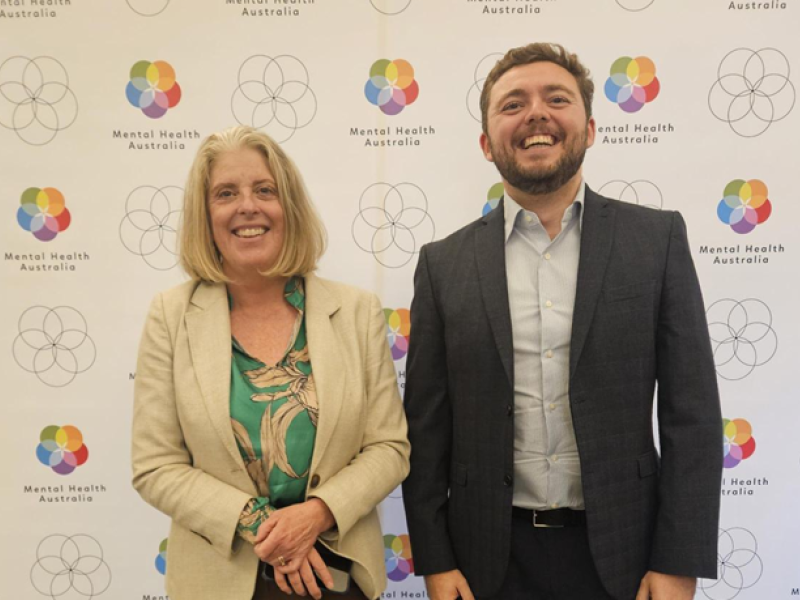
Most recently, Sam Donnelly (Mind’s Acting Manager Policy and Strategy) and I - pictured above - joined more than 80 organisations at Mental Health Australia’s National Policy Forum to work together on next steps in our advocacy to governments across the country. This is such an important time to maintain focus on meeting mental health needs and I always find it energising to connect with others across the sector to keep the pressure on.
Federal Budget
This year’s Federal Budget was clearly designed to ease cost-of-living pressures, and the Albanese Government should be recognised for that commitment. However, the absence of new investment in mental health and psychosocial support risks deepening uncertainty around access to care at a time when many Australians are already under significant pressure.
While the Federal Budget is only one piece of the puzzle, the lack of any new investment is particularly concerning in the context of ongoing changes and cuts to the NDIS. We know from the Australian Psychosocial Alliance’s Access Denied report that people living with psychosocial disability have already been disproportionately disadvantaged by NDIS access and processes.
One positive outcome from the Federal Budget was the inclusion of a Youth Housing Supplement for community housing providers who house young people (capped at 4,000 people over four years). In the lead-up to the Budget, Mind publicly supported Melbourne City Mission’s Home Time campaign, which called on the Government to address the rental gap preventing many young people from accessing available housing stock. The inclusion of this supplement is an important step towards a fairer and more equitable housing system that better supports young Australians, including those experiencing mental health challenges.
You can read Mind’s full response to the Federal Budget on our website.
Victorian Budget
In Victoria, it was encouraging to see continued funding for essential mental health services in the Victorian Budget. At Mind, we were particularly pleased to receive further funding to continue to deliver the Youth Outreach Recovery Service (YORS), Mind’s LGBTIQA+ Aftercare and the Mental Health and Wellbeing Hub servicing Cowes and Gippsland.
These funding commitments recognise the effectiveness of services that provide life-changing support for people experiencing significant mental health challenges.
While we welcome this continued investment, Mind will continue advocating for longer-term funding commitments. One-year rolling contracts create significant uncertainty for the people who rely on these services, as well as the dedicated staff delivering them. Longer funding cycles would provide greater stability for communities and the mental health workforce alike.
Visit the Mind website to read our full response to the Victorian Budget.
Western Australian Budget
The story was very different in Western Australia, where the State Budget included more than $400 million in additional funding for mental health initiatives.
This strong commitment from the Western Australian Government includes investment in new Step Up Step Down services and the state’s first Crisis Recovery and Intervention Support Service. These investments reflect a broader reform agenda focused on helping people access support earlier, closer to home and outside hospital settings wherever possible.
Our full response to the Western Australia Budget can be read on our website.
NDIS reform – changes to the NDIS Act
NDIS Minister Mark Butler recently introduced legislation to Parliament that, if passed, would result in significant changes to the NDIS, including reforms to eligibility, plan management, reassessment and registration.
This bill has now been referred to a Senate inquiry, with a reporting date of June 16.
Amongst the proposed changes are two issues that may further restrict access for people with psychosocial disability:
- a requirement for people to demonstrate they have accessed all appropriate treatment options before becoming eligible for the NDIS, and
- a proposed definition of functional capacity that does not adequately recognise the lived and fluctuating nature of psychosocial disability.
Submissions to the Community Affairs Legislation Committee are open until 29 May. Mind and the Australian Psychosocial Alliance (APA) will be making a submission and I’ll share more about this work in next month’s update. As we did through the Access Denied report, our advocacy will continue to bring together the knowledge, data and expertise of service users, services and staff. We will continue to amplify the voices of people with lived experience who shared their thoughts and challenges with us, as well as partnering with those across the sector to push for better outcomes for people with psychosocial disability.
Nicola Ballenden is Mind Australia’s Executive Director – Strategy Engagement and Housing Transformation.