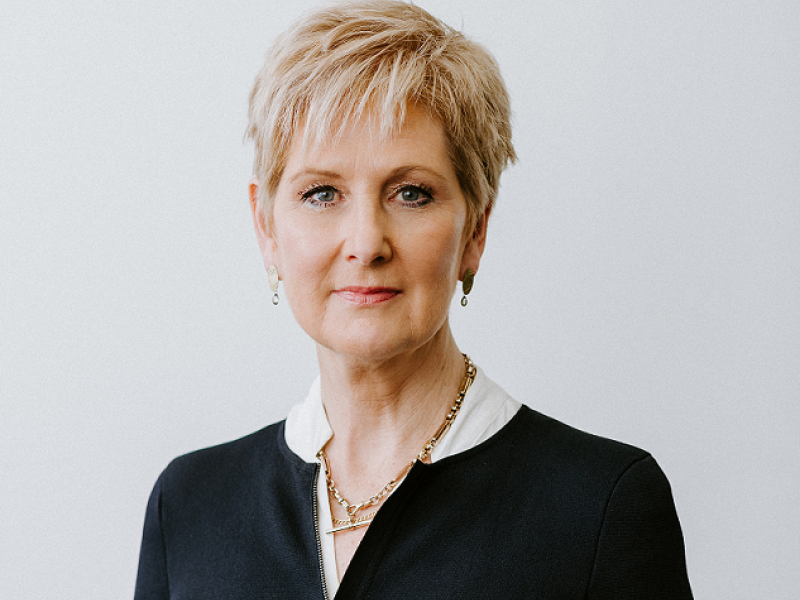
Mind Australia CEO Gill Callister says people experiencing psychosocial disability are already falling through the cracks of our healthcare system, and that they risk being marginalised even further during, and in the fall-out, of NDIS reform.
Ms Callister spoke at the 16th National Disability Summit in Melbourne on Thursday 18 September. Ms Callister’s speech can be read below.
Across Mind Australia, the Haven Foundation and One Door Mental Health, we work with well over a thousand NDIS participants, providing housing with support, allied health and support coordination.
We’ve been speaking to people across the country with both lived experience of psychosocial disability, and with lived experience of being told they’re not disabled in the right way to fit the NDIS or other support programs.
People falling through the cracks. Today I want to bring attention to those people.
That’s the equity from my title.
This isn’t about setting up disability types against one another. Instead, it’s about acknowledging that NDIS reform is hard.
We also need to remember how the NDIS came about if we want to maintain this national asset in the right shape and form.
Because I think that there’s a risk right now, as people sharpen their knives and call for NDIS savings.
That risk is that the unity and organisation of the campaign for the NDIS gets split into various camps, protecting what they’ve gained.
And right now, people with psychosocial disability are losing what they’ve gained.
I want to talk about four points:
- The fact that psychosocial disability access to the NDIS is falling much more than any other disability type
- The risk that there are serious equity blind spots in NDIS reform at present
- The way that we are seeing this impact on quality person-centred care for people with psychosocial disability
- And our concern about the human cost of cutting costs in the wrong way
There are just over 65,000 people with psychosocial disability in the NDIS, out of 740,000. That’s 8.8% of the Scheme.
Some NDIA and Productivity Commission estimates suggested psychosocial disability would account for around 14% of NDIS participants.
As recently as the 2020-21 financial year, 69% of people with psychosocial disability who applied for the NDIS got in.
But the eligibility rate for psychosocial disability has been dropping sharply.
In the most recent NDIS quarterly report data, the rate of psychosocial disability applications successfully accepted was just 25%.
People with psychosocial disability are more and more frequently being denied life-changing NDIS support, right now.
All that evidence gathering, all the time and effort and expense, all the meetings and making yourself vulnerable.
And only one in four gets in. For comparison, the access rate for all disability types was 79%.
These two rates have been diverging for years. We are extremely worried about this trend.
You all know the current politics of NDIS reform.
The Minister for Disability and the National Disability Insurance Scheme spoke at the Press Club a month ago.
Minister Butler said that the maturing of the NDIS required a change of tack.
You can choose your own lonely maritime metaphor here. I’m not sure whether it’s about more boats, more ports—or possibly more islands?
Either way, Minister Butler’s intervention is about trying to ensure there are multiple support systems for people with disability, across the continuum of need.
The Minister’s comments since have made clear that psychosocial disability is the next cab off the rank for development of Foundational Supports.
Our organisation and sector stand ready to support this effort. But we are also worried.
People are already hurting across the broader disability sector.
Change is always difficult, but the potential of not having life-changing support is especially terrifying. That’s my main concern today.
Sadly, the politics seem to be completely against people with psychosocial disability.
A recent article in The Australian Financial Review quoted anonymous people who have been in senior positions in and around the NDIA, seeking to move psychosocial disability out of the NDIS altogether.
There are suggestions that this is a responsibility of the states, a responsibility of the mental health system.
I’m going to make a case for why this is discriminatory and deeply misinformed.
These senior colleagues should know better.
We are not talking about people or needs that should be supported by the mental health system.
People with psychosocial disability who meet the NDIS criteria are a small subset of people with severe mental health conditions.
They may have fluctuating mental illness, which is appropriately served by the mental health system.
No matter such fluctuations, though, they have a true and enduring disability as well.
Minister Butler was clear early on in the Scheme that they do belong in the NDIS.
Some of this fear stems from a recent government report, stating that there are 230,500 people with severe mental health needs that are not having those needs met currently.
There is no scenario in which the NDIS accepts all of these 230,000 people. Nor should it.
These are different reform conversations with different policy solutions.
To make this distinction, I want to spend a bit of time explaining what it’s like to live with a psychosocial disability.
So, we can reflect on why the NDIS—and society—struggles so much to understand this disability type.
We need to humanise this cohort, not demonise them.
I want to begin with the caveat that no summary of a group of people with disability can do justice to every member of that group.
I want instead to capture the experiences of some of the most marginalised and complex members of the psychosocial disability cohort.
A cohort that is so often forgotten.
This has always been the case with severe mental illness.
And this has continued despite our increased understanding of how, for some people, the cumulative effect of their mental health challenges impacts their daily function, self-care, and social participation such that we call this a psychosocial disability.
Many people with psychosocial disability experience deep alienation and isolation.
They experience physical impacts of their disability through reduced executive function, and a reduction in communication ability, expression, engagement and understanding.
It is a daily struggle to care for themselves and manage tasks, stress and emotions.
Symptoms of their mental illnesses often cause anxiety, paranoia and mistrust, which then pervade social interactions, creating disabling social avoidance and isolation.
Many people in this group have a trauma background. They have histories of negative experiences, including restrictive practices.
Counter to the usual prejudiced assumption, they are more likely to experience violence. Not perpetrate it.
This group is overrepresented in homelessness statistics and other measures of housing insecurity.
They have a high rate of co-occurring marginalisation, including socio-economic disadvantage, criminal justice interaction, dual disability and poorer physical health.
Often, their psychosocial disability can go unacknowledged when caught in these other systems.
Due to the very symptoms of their mental illness and associated psychosocial disability, they often experience a complete loss of formal and informal support networks and social connections.
Sadly, these are generally not people joining us today to represent their own choices and needs.
The NDIS system rightly emphasises self-advocacy.
But this is a demand that some of the most complex participants cannot meet. They are often voiceless.
And the impacts of non-disability specific NDIS reforms, tightening access, are currently sending them to the back of the queue.
While non-disability specific in intent, the data I am presenting today shows a strongly disproportionate impact on this group.
This is despite the nature of their disability clearly fitting the six domains the NDIA uses to assess reduction in functional capacity.
We all know this list by heart:
- Communicating
- Socialising
- Learning
- Mobility
- Self-care
- Self-management.
The NDIA assessment process must ensure all applicants to the Scheme are assessed according to impairment against these functional domains.
Medical diagnosis is not an appropriate proxy. The NDIS Act is clear on this.
Only a better understanding of psychosocial disability can produce better outcomes.
Otherwise, those most in need will continue to lose out. It is an injustice we cannot support or allow to continue.
We see this life-changing benefit of the NDIS for people with psychosocial disability in our housing with support residences.
And our outcomes data shows the vital nature of support.
- A major reduction in hospitalisations, by as much as 70%.
- Improved participation and reduced loneliness.
- Improved physical health.
- People brought out of housing insecurity and other environmental causes of deep anxiety and stress, on top of disability.
When you compare the change in the access rate for every disability type in the NDIS, the picture becomes even clearer.
There are certainly several disability types that are seeing their access rate reduce. Acquired brain injury, hearing impairment, spinal cord injury and other physical conditions have all seen large reductions in their successful application rate.
But the drop for psychosocial disability is twice as large as for any other group. It has seen a 33% reduction since quarter 2 of the 2019-2020 financial year.
- Spinal cord injury saw the next largest reduction, at 17%.
- Something particular is happening to psychosocial disability.
When you look at the makeup of participants in the Scheme, you notice that people with psychosocial disability are reducing as a proportion of overall participants.
Once over 16% of participants, people with a primary psychosocial disability are now under 9%.
Other people are getting in, but people with psychosocial disability generally aren’t.
The data are particularly worrying if you look at people with psychosocial disability as a percentage of acceptances to the Scheme.
People with psychosocial disability may well make up 8.8% of Scheme participants right now.
But they only make up 3% of acceptances. These numbers are heading for the floor.
The original Productivity Commission modelling for the NDIS said that expert opinion confirmed a stable prevalence of ‘severe, persistent and complex’ psychosocial disability needs within the Australian population.
What can explain these psychosocial disability numbers dropping off a statistical cliff? Why is this happening?
After years of conversations and work with people with psychosocial disability, we believe there are three main reasons for the troubling reduction in the psychosocial disability access rate to the NDIS.
First, there continues to be a concerning poor understanding of psychosocial disability at the NDIA.
Assessments are inconsistent, and do not understand the difference between mental health conditions and psychosocial disability.
Assessors are vague, or worse, argue the evidence suggests a range of treatments have not yet been tried, treatments which, in many cases, are inappropriate and go against individual choices and expert clinical advice.
Second, the eligibility assessment process and assessors seem to ignore independent expert assessments altogether.
Rejection letters increasingly seem to provide non-individualised, almost copy-and-paste responses regardless of individual circumstances.
Our staff tell us that they are working with people who are the least well they've worked with, physically and psychosocially.
Yet these people in need can't get into the NDIS.
Throughout this process, prospective NDIS participants and staff are collecting greater reams of evidence than they used to, at great effort and inequitable cost.
We judge the quality of our applications as far higher than in earlier years.
Yet the rate of successful access for people with psychosocial disability continues to drop.
The process is increasingly disheartening.
Finally, the third explanation is about inequity. There are major increased barriers to application and access.
These include cost, because clinician reports are becoming more and more expensive.
We hear about psychiatrist reports that cost $1750, demanded of someone on the disability support pension.
Or a quote of $800 to $1200 to access your own medical records from the GP.
A hierarchy of preferred evidence is also a barrier.
Not only are psychiatrists and clinical psychologists more expensive, but you’re lucky if you can even get in the door to begin with.
Maybe you have to wait 6 months or more.
The NDIS shouldn’t be using a medical model to deny support to people with psychosocial disability.
It goes against the NDIS’ legislated focus on capacity and impairment anyway.
Fluctuating illness, rejection on grounds of supposed non-permanence, these are poor excuses when the NDIA has had so long to understand the needs of people with psychosocial disability.
We are talking about people who have been living with their disability for decades. And then you get told it’s not permanent?
Other barriers include the duplication of ID requirements, and administrative hurdles that demand a certain level of education, cognitive functioning or support.
These demands fall heaviest on those least able to meet them.
The game begins to feel rigged against you.
It’s a major equity blind spot in the NDIS reform process.
The sad thing is that we all know how NDIS support can be life-changing.
These people applying know it, too—but they can’t get in.
There is another answer to why this is happening, of course - budget pressure on the NDIS.
When we raise these concerns, the NDIA tells us that the dropping access rate for psychosocial disability is about tightening of processes to increase ‘Scheme integrity’.
So, no deliberate targeting. A necessary evil to reduce Scheme costs.
It underlines something that these reforms need to keep front of mind.
There’s a human cost to cutting costs in the wrong way.
Because these processes clearly haven’t been designed to accommodate the needs of all disability groups, nor to meet the needs of people from other, co-occurring backgrounds of marginalisation.
What this also demonstrates is that the NDIA has long proven itself unable to change.
This lack of change seems fixed, despite years of official government reviews and expert independent advice about how to make things better, for people with psychosocial disability and for the broader NDIS.
It is now long past time for change, but what would we change?
We want immediate attention to these access numbers, for psychosocial disability and of course for all disability types whose access is dropping.
We want a dedicated psychosocial disability pathway within the NDIS, and an uplift in the NDIA’s psychosocial disability capability.
Proportionate registration would defuse much of the fraud discussion in favour of quality and safety.
Like many, we want independent pricing and rapid consideration of pricing reforms in line with the Independent Pricing Committee report.
But much more than a shopping list of policy solutions, we want a fair go for everyone who needs and deserves NDIS support.
As I turn for home now, I want to broaden the discussion from psychosocial disability.
With the reform and media environment as it is, I’m worried that psychosocial disability is one of the canaries in the coalmine.
Because some commentary suggests that the politics are against all people with disability.
Cost. Won’t somebody think of the taxpayers?
These arguments are heard before quality. Before safety. Before ethics. Before duty of care.
Before everything we need, so we can uphold human rights, provide dignity, and empower choice and control.
So, although I’ve spoken about psychosocial disability access today. This is not just a psychosocial disability story.
It overlaps with parallel stories about issues with reassessments, with the cutting of high intensity supports, with provider viability and market stewardship.
You will have others to add to the list.
From our view of the current situation, at Mind, it reminds us that risks at scale, risks for quality and ethical providers, always mean risks for participants, too.
But first and foremost, this story is about people with disability getting what they’ve always deserved.
That has to be possible, as well as necessary reform to the NDIS.
Three years before the NDIS began, Bill Shorten opened the first National Disability Summit in 2010.
It’s a powerful speech and the core message remains relevant today.
I want to quote it a little.
Shorten could see the need for ‘transformational change in the way we deal with disability.’
He wanted ‘the sector to be vocal and united, to be loud and proud, to be organised and to be political, to be consistent and persistent.’
The campaign for the NDIS succeeded.
It changed the country for the better.
But then the cost went up.
And something has since changed in the public narrative about the NDIS.
We are back at penny-pinching arguments.
There is less unity. There is less discussion of the life-changing possibilities the Scheme has created.
We hear about the cost of the Scheme. We don’t hear as much about how the NDIS has opened up incredible productivity gains and avoided costs. People with disability in employment. Families, carers and kin staying in their jobs.
In this environment, focused on cost and savings, it is easy for opponents to say that psychosocial disability is episodic, that it should be dealt with in another way.
I’ve made the case today that this position does a disservice to people with psychosocial disability.
I’ve argued that it ignores the reality of these NDIS participants’ lives.
This is a group within the NDIS that has fewer self-advocates and fewer representatives in governance and reform committees.
This should be cause for conscious representation, not further marginalisation.
If there is one thing we know, it is that this group has never been disadvantaged in this way. No matter the support system they seek help from.
And the NDIS has been life-changing for them.
For this subset of people with severe mental health challenges, who are often isolated and estranged.
No matter the necessity of reform, we must proceed with caution and an understanding of the facts.
Bill Shorten finished his speech by saying, ‘We’re not there. Not yet. But we can be—soon.’
He was right about the NDIS. Three years later, it came to be.
But the problem with progress is that it’s hard won and easily lost.
We—many of you—got there with the NDIS.
Now we have to make sure others can keep getting there, too. Thank you.