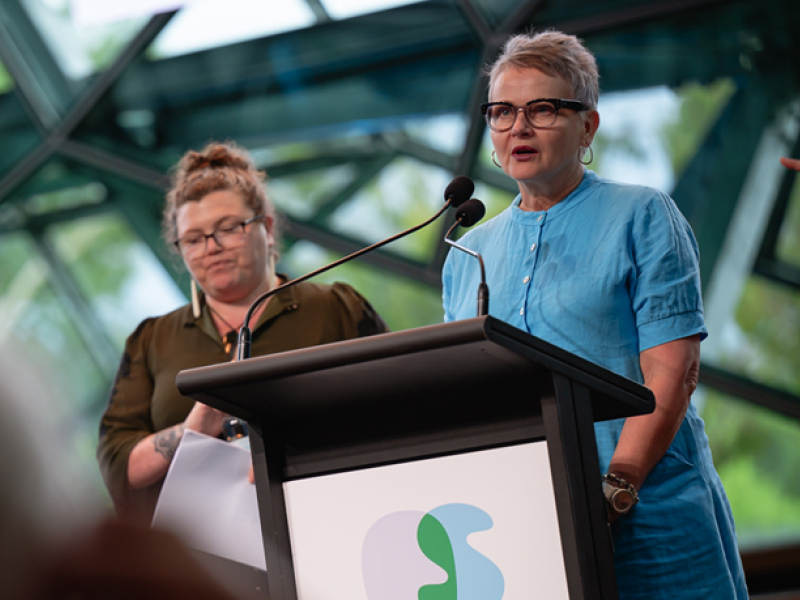
In this third and final excerpt from the 2026 Stratford Lecture, Rana Te Huia and Magdel Hammond discuss three structural obstacles to fully realised lived experience organisations.
Looking back at what we've experienced in Aotearoa, protecting the autonomy of Lived Experience-governed organisations requires structural change - particularly in how funding is designed and distributed.
In Aotearoa, funding instability significantly shaped our work. Contracts often prioritised mainstream, clinical outcome measures, which sometimes compromised our peer model.
Because funding was tied to specific tenders, we had to deliver the work that was funded - not always the work we most wanted to do or what our community most needed.
First, the funding model needs to shift. Currently, government and health systems largely dictate what work gets funded, which in turn shapes what community organisations can do. If Lived Experience decision-makers - genuinely connected to community - were embedded at governance and commissioning levels, funding priorities would be more community-led and responsive.
Second, the competitive tendering environment pits organisations against one another. This creates unhealthy NGO culture and undermines collaboration. When groups are forced to compete for survival, it limits collective action and weakens the sector's ability to work together for community wellbeing.
Finally, mainstream mental health services must commit to meaningful representation at all levels - governance, management, and workforce. This includes lived experience leadership alongside First Nations, queer communities, refugee populations, youth, elders, disabled people, and others experiencing intersectional marginalisation. Communities need to see themselves reflected in decision-making and service delivery.