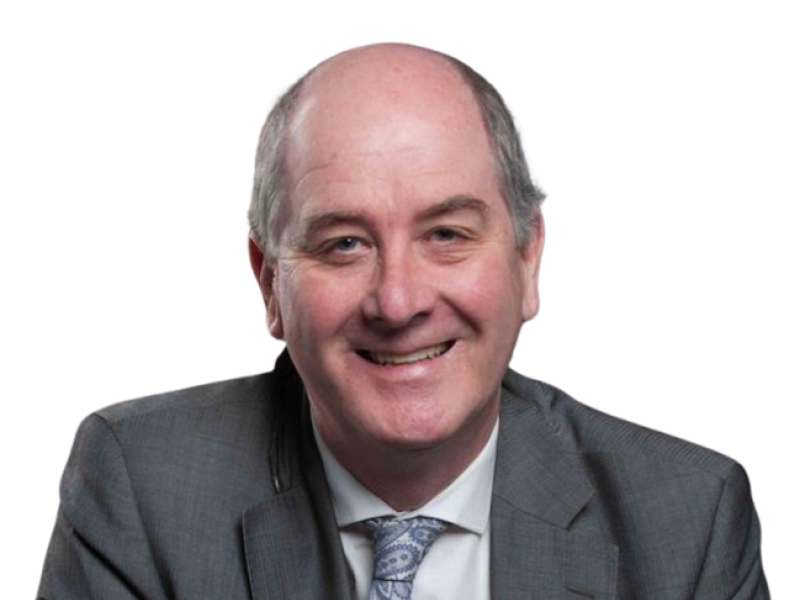
By Richard Wynne
This opinion piece by Mind Australia Board director and former Victorian Labor minister Richard Wynne was originally published on Croakey on 18 August 2025. Thank you to Croakey for permission to republish this opinion piece.
The Federal Government’s Economic Reform Roundtable is taking place this week. It follows several separate roundtables in previous weeks, including last week’s dedicated Health, Disability and Ageing Economic Reform Roundtable in Sydney.
Minister for Health, Disability and Ageing Mark Butler said that the health-focussed precursor roundtable discussed four issues: “the care workforce, digital systems and AI; keeping Australians healthy through prevention; early intervention and better treatment; and how to best integrate the health, disability and ageing sectors.”
This final integration point is critical for increased productivity. If governments across the country can invest in the right support earlier, without getting stuck on which level of government is paying, then we can keep people in work longer, and at home and in their community longer, without life-changing, longer-term human and productivity consequences.
The current political moment is ripe for such action.
We’ve all heard the numbers of Labor’s huge win in the 2025 election: equal highest seat count ever in the House of Representatives, the first government since Harold Holt in 1966 to retain all seats. It is a historic mandate for Labor, any first term hang ups should be banished.
So, as the 48th Parliament kicks into gear, it’s time to raise the horizon of possibility on social reform.
My Labor colleagues will be faced with many worthy causes from the Roundtable, and more broadly.
As the rubber hits the road, one issue tops my list – complex mental health.
Complex mental health too often ends up in the too hard basket.
Psychosocial disability
People with complex mental health challenges often experience high levels of social disadvantage, struggle to maintain stable housing, and experience high levels of social isolation and poorer physical health.
For some, mental health challenges impact their daily function, self-care and social participation such that we call this a psychosocial disability. Regardless of stigma, discrimination and misunderstanding, this is a real disability and people deserve support and understanding.
Right now, there’s a rare opportunity for change. A chance to achieve greater equity for marginalised Australians.
With a senior minister like Mark Butler responsible for health and disability, it’s possible to achieve the integrated reform the mental health and psychosocial disability systems need.
People with a psychosocial disability are falling through a widening gap between both systems.
Psychosocial disability access to the NDIS has been reducing dramatically recently. In the latest NDIS quarterly figures, only 23 percent of people with a psychosocial disability who applied, got in. This contrasts with the 79 percent success rate of applications for all disabilities.
Putting aside a difficult conversation about differences between disability types and people’s support needs—that big a discrepancy is a sign of serious system issues.
Mind Australia and The Haven Foundation see and hear about the impacts of this on marginalised people every single day, in our work supporting people living with mental health challenges. We also heard case after case in a project of deep listening around the country to people with NDIS concerns.
One example is the woman living with schizophrenia who, being denied NDIS access, is coming in and out of the emergency department every few months because there’s no support until she’s in crisis.
Another example is the man living with a psychosocial disability and autism who, with the right support, was proudly maintaining his tenancy, but is now on the verge of homelessness because of issues with inadequate funding.
These stories—and the people living them—are often invisible. Or even worse, when they are seen, we both fear and blame them instead.
Instead of holding onto old prejudices, we need to acknowledge this is a system problem.
Unmet needs
The government’s own report on “unmet need” highlights that there are more than 490,000 people with moderate and severe mental health needs currently, that aren’t having those needs met.
That should shock us—it’s greater than the population of the ACT.
This is why Mind Australia and the Haven Foundation support the call by Mental Health Australia and other mental health peak bodies for increased investment in psychosocial supports.
But what this term of Federal Government also needs, is a focus on integrated health, mental health and disability reform. This means combining the policy intent of the new system of Foundational Supports, responding to unmet need and landing NDIS reform.
That’s why we welcomed the addition of Disability and the NDIS to Minister Butler’s responsibilities.
Reform to address unmet mental health need can’t happen without thinking through the connection between the mental health system and the NDIS.
Don’t get me wrong, the NDIS is absolutely essential. It is a Labor flagship to be proud of, no matter the challenges of adjustment.
Some state-based mental health programs, that used to support people out in community, no longer exist since the creation of the NDIS.
People with a psychosocial disability are falling through the cracks between two systems that aren’t connected.
When those who need help seek support, they often get a torturous and lengthy process instead. We hear this same story from consumers and carers across the country. It’s a critical equity issue for the Labor government to fix.
Crucially, the current situation is a false economy.
If people with psychosocial disability are supported at the right time, a higher cost later in the emergency department is avoided. If you support someone with moderate to severe needs earlier, you could stop progression into psychosocial disability.
It doesn’t matter which level of government is paying, or whether it’s health or disability. The critical thing is serving the continuum of need, easing the interaction between different systems. Because people don’t get to separate themselves based on portfolio allocations.
That’s the opportunity for Labor this term: NDIS reform, with equity at its heart.
Good solutions exist already for this.
Responding to unmet mental health need, particularly for people with severe mental health needs, would help progress the proposed system of Foundational Supports for people with disability who aren’t in the NDIS. These will provide support, including programs targeting life skills, navigation, information and capacity building.
The NDIS Review is also full of bright ideas including a psychosocial disability-specific pathway and approach. Released in 2023, the Review now needs a formal government response.
We need to tackle these reforms in an integrated way, now.
Increasing the nation’s productivity is impossible without helping the nation’s people and supporting their mental health. Hundreds of thousands are counting on it.