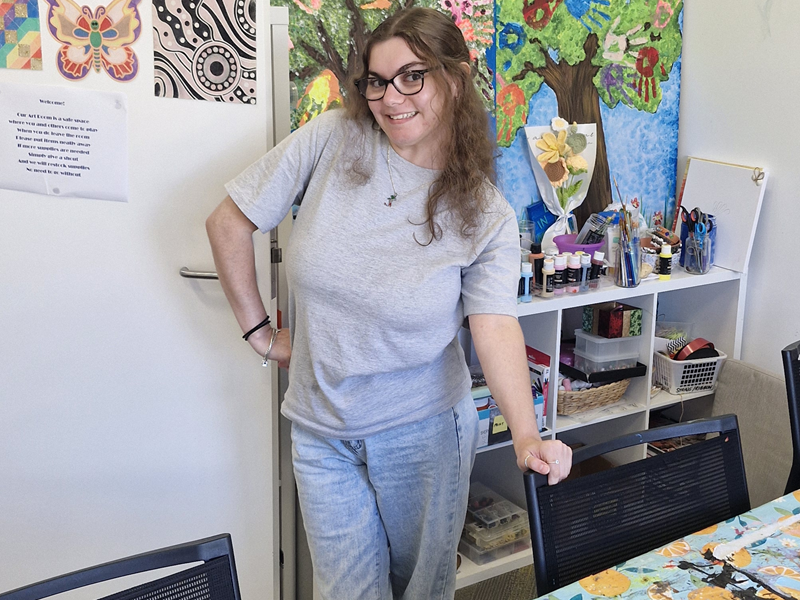
Cynthia doesn’t know what sparked her interest in art, or when it started, but art has always been there for her, especially throughout her mental health journey living with complex post-traumatic stress disorder (CPTSD).
“I remember being the kid at school that got into trouble for scribbling on books instead of writing notes,” she says.
“For me, art began as an escape and a safe way of expressing myself when I was young. To this day, it’s still how I can express emotions and feelings that are confronting to talk about. It’s not rainbows and butterflies, but it [art] is a more approachable way to communicate.”
“When I’m painting, I feel the emotion of the brush and the smoothness of the paint – I think I was practising mindfulness before I knew what it was. Focusing on just one thing in that moment and nothing else, it brings you peace to be in one mind.”
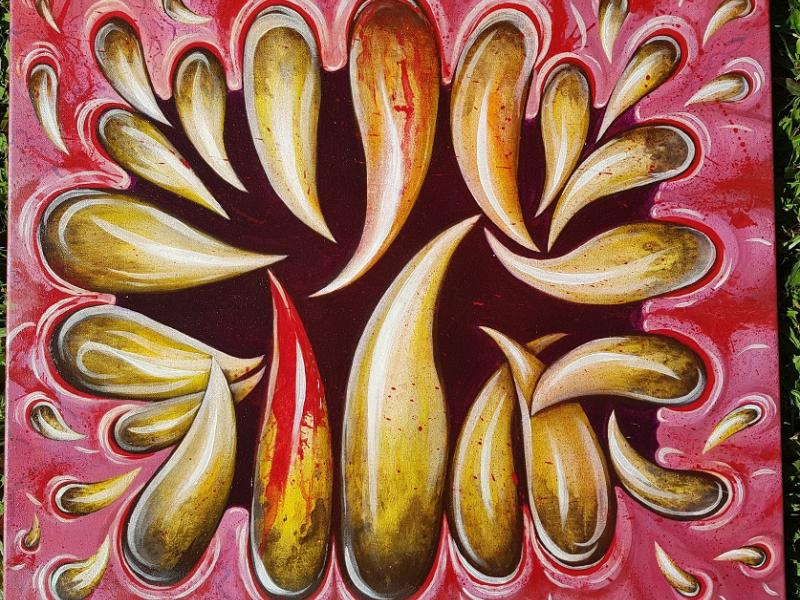
Cynthia, who is learning important life skills for independent living and mindfulness techniques. She wants others to experience the mental health benefits of art; whether it’s stress-relief, communicating or encouraging creativity. As part of Queensland Mental Health Week, Cynthia will be displaying her work at a local art exhibition hoping to inspire others.
“When I first heard about the art exhibition I thought it was a great way to raise awareness of the experiences of people with mental health challenges – it’s a really good thing to be promoting a more inclusive environment,” Cynthia says.
“I want to encourage other people to be able to feel free to express themselves and be open about the mental health struggles they might have – it gets easier once you can talk and ask for help. With painting, you can speak without verbally expressing what you’re trying to say. The more I talk through my painting the easier it becomes to say.”
The exhibition, which is being held at the Jubilee Community Centre in Mackay until Tuesday 29 September, is being hosted by Mind in partnership with other mental health services and local businesses.
Kristie, a Mind peer worker and one of the event organisers, says the exhibition has already had benefits for Mind clients, even before anyone exhibited their work.
“We are involving clients in the process as much as we can,” she says. “Clients have helped us plan, they are networking with businesses, meeting and talking to people and learning valuable life skills so they can live independently and connect with the community.”
You can learn more about Mind support services in your area by calling Mind Connect on 1300 286 463.
If this article raises concerns for you, please call Lifeline on 13 11 14. Aboriginal and Torres Straits Islanders can also call 13 YARN (13 92 76) a 24/7 national crisis support telephone service staffed by Aboriginal and Torres Strait Islander peoples.
If you would like more information, please contact us.
1300 286 463
[email protected]
Having meaningful and productive conversations with young people can be challenging, especially when trying to discuss their mental health and what’s going on in their lives.