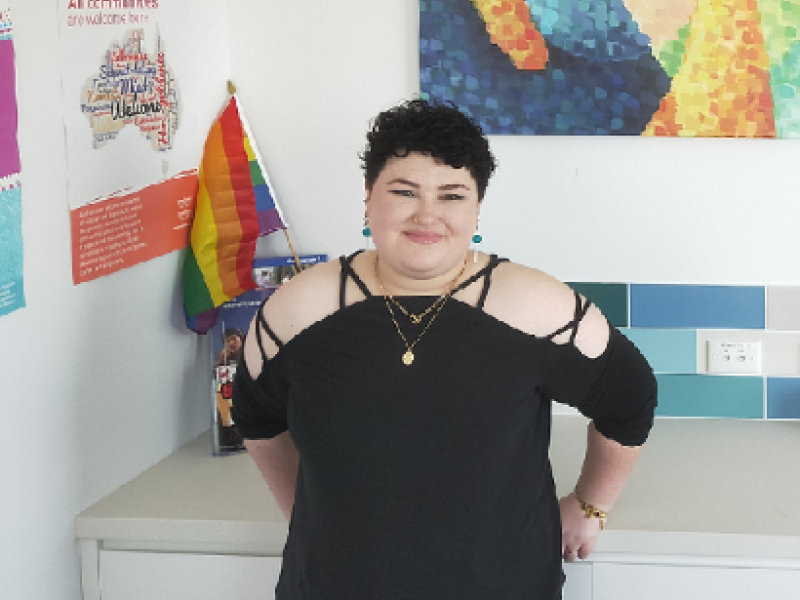
Art has helped Lucy, who uses they/them pronouns, share their thoughts and feelings for nearly 10 years now. More recently, art has been a helpful outlet for Lucy, 25, as they have navigated their mental health recovery journey and a bipolar disorder diagnosis.
“I think I have always used art as a form of self-care, even without knowing it,” Lucy says. “I was 16 or 17 when I started to draw things directly related to my emotions. I use art as an outlet for the experiences I’ve gone through, as well as a way of reaching out to others and starting a conversation.”
After a few hospital stays in 2020 due to mental health episodes, the Step Up, Step Down service in Mackay was recommended to Lucy. At this short-term residential mental health recovery support service, Lucy was helped by a partnership of clinical and psychosocial support staff to improve mental health and wellbeing, and set them on a path to recovery.
“Step Up, Step Down is such a great place and it was what I needed. I had mostly the right medication from other programs, but I had never really had that social support aspect of it,” Lucy says. “As soon as I walked in the doors it felt like a home; it was warm, it looks nice and having access to my phone really helped as well. It meant a lot that I could stay somewhere and feel like they really cared.”
After Lucy’s 28-day stay, they left the Step Up, Step Down and started receiving outreach support from Mind through an individual recovery support program. The focus of this outreach service is to provide recovery-orientated support for people with mental ill-health so they can achieve personally significant goals and enrich their quality of life.
Recently, Lucy returned to Mackay Step Up Step Down to gift the service an art piece as a way of saying thanks.
“To me, every brush stroke you see is a person who has stayed here. I wanted it to represent not only me but each person who has come through Step Up, Step Down,” Lucy says.
“It’s a bit emotional seeing my piece up on the wall, because I spent a couple of months making it and I put my heart into this piece. It’s nice to know it might help somebody in some way. I felt like this centre gave me so much and put me on a path to succeed so it was nice to be able to give back.”
If you would like more information, please contact us via Mind Connect or phone: 1300 286 463
If this article raises concerns for you, please call Lifeline on 13 11 14. Aboriginal and Torres Straits Islanders can also call 13 YARN (13 92 76) a 24/7 national crisis support telephone service staffed by Aboriginal and Torres Strait Islander peoples.
If you would like more information, please contact us.
1300 286 463
[email protected]
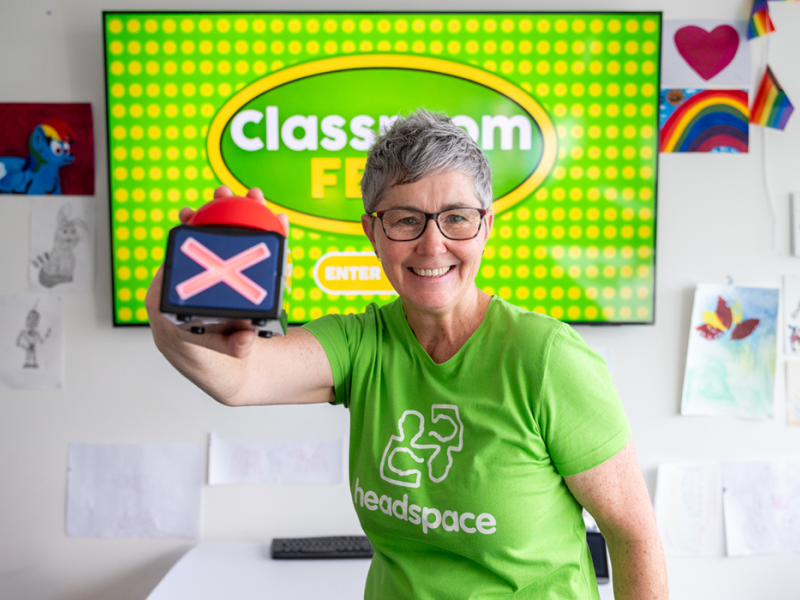
Having meaningful and productive conversations with young people can be challenging, especially when trying to discuss their mental health and what’s going on in their lives.